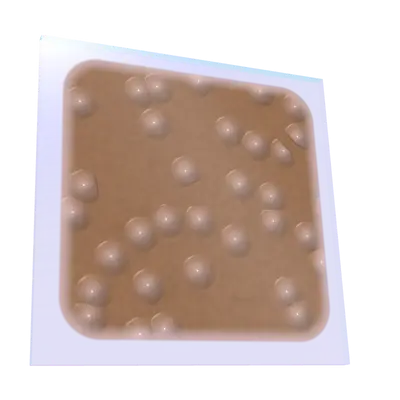
What warts look like on brown and Black skin
- Common warts: firm, rough domes on the fingers, backs of the hands, elbows and knees, skin-coloured to grey-brown, interrupting the normal skin lines. Paring the surface reveals black pinpoint dots, which are tiny clotted blood vessels.
- Flat (plane) warts: small, smooth, flat-topped spots, often lighter or darker than the surrounding skin, in clusters on the face, backs of the hands and shins. Shaving spreads them in lines across the beard area or legs.
- Filiform warts: narrow, finger-like spikes on the eyelids, lips and neck.
- Periungual warts: thickened, cracked skin around the nails.
- Plantar warts on the soles are described under plantar warts, and warts on genital skin under genital warts.
Several other growths resemble warts, including small dark spots on the face (DPN), skin tags, molluscum and, rarely in adults, skin cancer.
How to spot it
- The surface is rough, like a tiny cauliflower.
- Skin lines go around the bump, not across it.
- Black dots appear when the surface is rubbed down.
- New ones appear nearby or where you scratch.
Causes and triggers
Over a hundred types of HPV infect skin. The virus enters through tiny cuts and softened, wet skin, and takes weeks to months to produce a visible wart. Different types prefer different sites; those causing hand warts are not the types linked to cervical cancer.
How it is diagnosed at the clinic
Warts are recognised by examination and dermoscopy. A growth that looks unusual is sampled (skin biopsy).
Wart removal at the clinic
The dermatologist matches treatment to the wart, the site and your skin:
- Salicylic acid at prescription strength, applied daily after soaking and filing, for hands and feet. It is slow but leaves the fewest marks.
- Cryotherapy with liquid nitrogen every two to three weeks.
- Electrocautery or curettage under local anaesthetic for filiform and stubborn warts.
- Creams that prompt an immune response for flat or resistant warts.
Expect several visits. On dark skin, temporary dark or pale marks are common whichever method is used, and patients prone to keloids and raised scars are treated with extra care. Procedures are part of skin surgery.
Prevention and daily care
- Cover warts with a plaster when swimming or at the gym.
- Dry hands and feet well; wear slippers in shared bathrooms.
- Do not shave over warts; use a separate razor around them.
- Keep nails short and stop nail biting.
Common questions
Do warts go away on their own?
Often, yes. In children, about two in three warts disappear within two years as the immune system recognises the virus. In adults they last longer. Treatment is worthwhile when warts are painful, spreading, on the face, or causing embarrassment.
Are warts contagious?
Yes, mildly. The virus passes by direct contact and via shared towels, razors, nail tools and wet floors, and you can spread it to other parts of your own body by picking, biting nails or shaving. Covering warts and not sharing personal items reduces spread.
Does freezing a wart leave a mark on dark skin?
It can. Freezing may leave a pale or dark patch that lasts months, because pigment cells are sensitive to cold. The dermatologist uses shorter freezes on dark skin, or chooses another method for the face and other visible areas.
Why do warts come back after removal?
Treatment removes the visible wart, but virus can remain in surrounding skin that looks normal. Recurrence is common with every method. Completing the full course and treating new warts early gives the best results.
References
- NHS. Warts and verrucas.
- DermNet. Viral wart.
- British Journal of Dermatology. British Association of Dermatologists' guidelines for the management of cutaneous warts.
- American Academy of Dermatology. Warts: diagnosis and treatment.
This page gives general health information. It does not replace a consultation, and it cannot diagnose your skin. If you are worried about a symptom, see a doctor. Read the full medical disclaimer.
Visit O.C Clinics in Oniru
| Monday–Friday | 9:00 AM–5:00 PM |
|---|---|
| Saturday | 10:00 AM–4:00 PM |
| Sunday | Closed |
