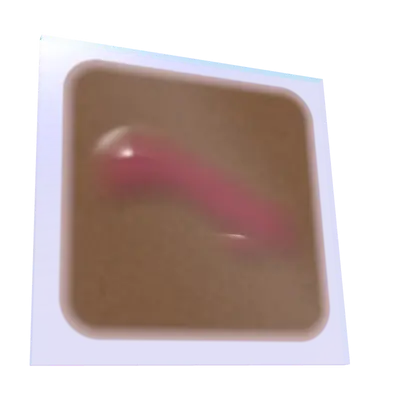
What keloids look like on brown and Black skin
A keloid is smooth, firm, rubbery and raised, with a shiny surface. On dark skin it is usually darker than the surrounding skin, sometimes with a pink or purple tone while it is growing. It extends past the boundary of the wound that started it, sometimes with claw-like edges. That spread is what separates a keloid from a hypertrophic scar, which is raised but stays within the wound and often flattens with time.
Typical sites:
- Earlobes and ear cartilage, after piercing: round or dumbbell-shaped lumps
- Centre of the chest, often from an acne spot or a scratch too small to remember
- Shoulders and upper back
- Jawline and beard area, after acne or razor bumps (pseudofolliculitis barbae)
- Back of the scalp and neck in men; see scalp folliculitis
- Surgical scars, including caesarean scars
- Vaccination sites on the upper arm
Keloids rarely form on the palms, soles, eyelids or the centre of the face.
How to spot it
- A scar that is still getting thicker three months or more after the injury
- It has grown wider than the original cut, piercing or spot
- It itches, burns or is tender, especially when growing
- It feels hard and does not flatten when pressed
- Relatives have similar scars
Causes and triggers
After an injury, cells called fibroblasts lay down collagen to repair the skin. In a keloid they do not switch off. Collagen keeps accumulating for months or years.
Triggers include ear and body piercing, surgery, acne, chickenpox, burns, insect bites, injections, tattoos, shaving bumps, and traditional scarification. Tension across a wound and infection or prolonged healing increase the risk. Keloids are commonest between the ages of 10 and 30 and may grow in pregnancy.
How it is diagnosed at the clinic
The diagnosis is made by examination and the history of an injury. The dermatologist measures and photographs the keloid, with your consent, to track response. A biopsy is taken only if the lump is unusual, because cutting into a keloid can stimulate it.
Keloid removal and treatment at the clinic
Treatment is chosen by size, site, age of the keloid and your goals. Most plans combine two or more of the following.
| Treatment | What it does | Notes |
|---|---|---|
| Steroid injection | Softens and flattens; eases itch and pain | Every 4–6 weeks; several sessions |
| Silicone gel or sheet | Hydrates and flattens new scars | Daily for months; best for prevention |
| Pressure | Limits regrowth | Pressure earrings after ear surgery; garments for the trunk |
| Cryotherapy | Freezes and shrinks | Can leave a pale mark on dark skin |
| Other injected medicines | For keloids that resist steroid | Chosen by the dermatologist |
| Surgical excision | Removes bulk | Only with injections, pressure or other treatment afterwards |
| Laser | Reduces redness and thickness | An addition, not a stand-alone treatment |
Earlobe keloids do well with surgical removal followed by steroid injections and a pressure earring worn for months. Chest and shoulder keloids are the hardest; injections and silicone are preferred to surgery. See scar revision and skin surgery.
Side effects of steroid injection include thinning or a dent in the skin, visible small vessels and a pale halo around the injected area, which is more noticeable on dark skin and usually recovers over months. The dose and spacing are adjusted to limit this.
Be wary of anyone offering to remove a keloid in a single visit with a promise that it will not return.
Prevention and daily care
- Treat acne and razor bumps early.
- Avoid piercings and tattoos if you or close relatives form keloids.
- Tell every surgeon and dentist about your tendency before any procedure.
- Keep new wounds clean, moist with petroleum jelly and covered; do not let them dry and crack.
- Once a wound has closed, use silicone gel or sheets daily for at least two months.
- Report any thickening early: small, young keloids respond best.
Common questions
Can keloids be removed permanently?
Keloids can be flattened, shrunk and sometimes removed, but any of them can return, and no treatment can promise they will not. Cutting a keloid out without other treatment leads to regrowth in well over half of cases, often larger. Combining surgery with injections or pressure greatly lowers that risk.
What is the best treatment for keloids?
Steroid injections into the keloid are the usual first treatment. They soften and flatten most keloids over several sessions and relieve itch and pain. They are often combined with silicone, pressure or cryotherapy. Large or ear keloids may be removed surgically, followed immediately by preventive treatment.
Do keloid injections hurt?
Yes, briefly. Keloids are dense, so the injection causes pressure and stinging for a minute or so. Numbing cream, cooling or mixing local anaesthetic with the medicine helps. Treatment is repeated every four to six weeks, and each session becomes easier as the keloid softens.
Why do Black people get keloids more often?
The tendency is inherited. Keloids are many times more common in people of African descent, and often run in families, although the genes involved are not fully understood. Darker skin does not cause them directly. Anyone with a parent or sibling who has keloids should assume they are at risk.
Can I get a piercing or tattoo if I form keloids?
It is safest not to. Earlobes and cartilage are among the commonest sites for keloids. If you already have a piercing and notice a firm bump forming, remove the earring and see a dermatologist early; small, new keloids respond far better than established ones.
Are keloids cancerous?
No. A keloid is an overgrowth of scar tissue and does not turn into cancer. However, a lump that grows quickly, bleeds, ulcerates or appeared without any injury should be examined, because other growths can resemble a keloid. A dermatologist can confirm the diagnosis by examination.
References
- NHS. Keloid scars.
- DermNet. Keloid and hypertrophic scar.
- American Academy of Dermatology. Keloid scars: diagnosis and treatment.
- International Journal of Dermatology. Keloids: a review of therapeutic management.
- Dermatologic Surgery. Updated international clinical recommendations on scar management.
This page gives general health information. It does not replace a consultation, and it cannot diagnose your skin. If you are worried about a symptom, see a doctor. Read the full medical disclaimer.
Visit O.C Clinics in Oniru
| Monday–Friday | 9:00 AM–5:00 PM |
|---|---|
| Saturday | 10:00 AM–4:00 PM |
| Sunday | Closed |
