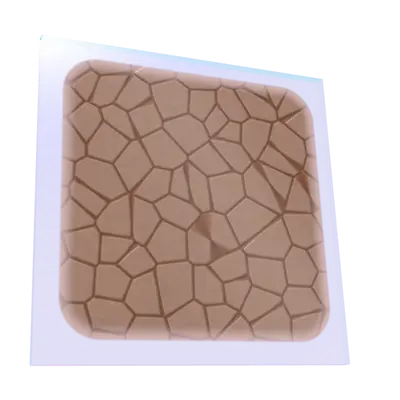
What eczema looks like on brown and Black skin
Textbook eczema is described as red. On brown and Black skin a flare usually looks dark brown, grey, ashen or violet, and the inflammation is easier to feel, as warmth and roughness, than to see. Because redness is missed, eczema in dark skin is often judged milder than it is.
Features seen more often on dark skin:
- Small bumps around hair follicles that give the skin a goose-flesh texture, especially on the trunk and arms.
- Thick, leathery patches with deep skin lines where scratching has gone on for weeks, at the neck, wrists, ankles and behind the knees.
- Dark marks or pale patches left after a flare. These are temporary but can take months to even out; see post-inflammatory hypopigmentation.
- Dry, grey “ashy” skin all over.
- Darkening and fine folds under the eyes.
Where it appears changes with age: cheeks and outer limbs in babies (baby eczema), the creases of elbows and knees, neck, wrists and ankles in children, and the hands, eyelids, neck and flexures in adults.
How to spot it
- Itch that is hard to ignore and worse at night
- Dry skin generally, with rougher, darker patches
- Flares that come and go over months or years
- Onset in childhood, or a personal or family history of asthma or hay fever
- Patches in the creases of the elbows and knees
A single ring-shaped patch with a raised, scaly edge and clearer centre is more likely to be ringworm. Our article Ringworm or eczema: how to tell the difference compares them.
Causes and triggers
People with eczema have a weaker skin barrier, often inherited. The skin loses water easily and lets in irritants and allergens, and the immune system in the skin overreacts.
Triggers that matter in Lagos:
- Harmattan: cold, dry, dusty air pulls moisture from the skin. See How to care for your skin during harmattan.
- Heat and sweat for the rest of the year.
- Antiseptic and medicated soaps, hot water and long baths.
- Scrubbing with sponges and nets.
- Fragranced creams and perfumes.
- Dust, cockroaches and pet dander.
- Infection with staphylococcus bacteria.
- Stress and lack of sleep.
How it is diagnosed at the clinic
Eczema is diagnosed from the history and the appearance of the skin. Tests are used to rule out other causes or complications: a skin scraping if ringworm is possible, a swab if infection is suspected, and patch testing when eczema on the hands, face or eyelids suggests contact allergy.
Eczema treatment at the clinic
Moisturisers, every day. Thick, fragrance-free creams or ointments applied after bathing and again during the day, in generous amounts. This is treatment, not an optional extra.
Anti-inflammatory creams for flares. A steroid cream or ointment of the strength suited to the site, once or twice daily until the patch is flat and no longer itchy, then stopped or reduced as planned. Non-steroid creams (calcineurin inhibitors) are used on delicate areas such as the eyelids.
Proactive treatment. For patches that keep returning in the same place, applying the anti-inflammatory cream twice a week between flares prevents many relapses.
Treating infection. Weeping or crusted eczema is treated with antibiotics where needed.
Help with sleep and itch. Cooling the skin, keeping nails short and, sometimes, a short course of an antihistamine at night.
For severe eczema: narrowband UVB phototherapy, or tablets and injectable medicines that calm the immune response, with monitoring.
You leave with a written plan saying what to use where, how much and for how long. Medicines are dispensed by the clinic’s pharmacy.
Prevention and daily care
- Bathe once a day in lukewarm water for under ten minutes, with a mild, fragrance-free cleanser.
- Pat dry and moisturise within three minutes.
- Use your hands, not a sponge.
- Wear loose cotton; rinse laundry well.
- Keep fingernails short and smooth.
- Moisturise more during harmattan and in air-conditioned rooms.
- Treat flares on the first day, not the fifth.
Common questions
What is the best treatment for eczema?
The foundation is a plain moisturiser used generously every day, with a steroid cream of the right strength applied to inflamed patches during flares. Most eczema is controlled this way. Severe or widespread eczema may need phototherapy, tablets or newer injectable medicines prescribed by a dermatologist.
Can eczema be cured?
There is no cure, but eczema can be kept under good control, and many children improve as they grow. The tendency to dry, sensitive skin usually remains. The aim of treatment is clear or nearly clear skin most of the time, with flares treated quickly.
Are steroid creams safe for eczema?
Yes, when the strength matches the body site and they are used for the period advised. Milder creams are used on the face and skin folds, stronger ones on thick patches. Side effects such as skin thinning come from strong creams used continuously for months without review, or from unlabelled mixed creams.
What triggers eczema flare-ups?
Common triggers are dry air during harmattan, heat and sweat, harsh or antiseptic soaps, fragranced creams, wool and synthetic fabrics, dust, infections and stress. Scratching itself keeps a flare going. Triggers differ between people, so noticing your own pattern helps.
Is eczema contagious?
No. You cannot catch eczema or pass it on by touch, sharing a bed or swimming together. Broken eczema skin can become infected with bacteria or the cold sore virus, and those infections can spread, which is why weeping or crusted eczema should be treated promptly.
Should I avoid certain foods if I have eczema?
Not unless a food clearly and repeatedly causes a reaction. Most eczema is not caused by food, and cutting out food groups, especially in children, can harm nutrition without helping the skin. A doctor can assess whether food allergy testing is worthwhile.
References
- NHS. Atopic eczema.
- DermNet. Atopic dermatitis.
- American Academy of Dermatology. Eczema types: atopic dermatitis overview.
- National Institute for Health and Care Excellence. Atopic eczema in under 12s: diagnosis and management (CG57).
- British Journal of Dermatology. Atopic dermatitis in skin of colour: clinical presentation and management.
This page gives general health information. It does not replace a consultation, and it cannot diagnose your skin. If you are worried about a symptom, see a doctor. Read the full medical disclaimer.
Visit O.C Clinics in Oniru
| Monday–Friday | 9:00 AM–5:00 PM |
|---|---|
| Saturday | 10:00 AM–4:00 PM |
| Sunday | Closed |
