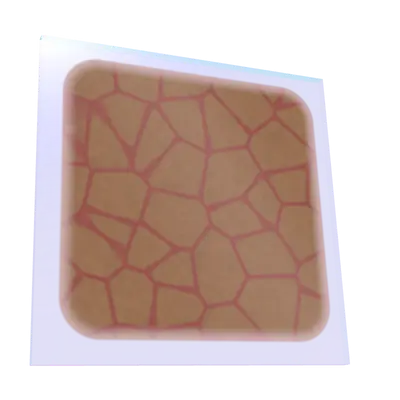
What the damage looks like on brown and Black skin
The first sign is often uneven colour: the face and body become lighter while the knuckles, elbows, knees, ankles and the skin around the eyes stay dark or look darker by contrast. With time other changes appear:
- Thinning. The skin turns shiny and fragile; small knocks cause bruises and tears, and wounds heal slowly.
- Stretch marks. Wide, dark or purple bands on the inner thighs, upper arms, breasts, abdomen and armpits, far broader than ordinary stretch marks.
- Redness and visible veins, especially on the cheeks and chest.
- Steroid acne and extra hair on the face.
- Infections. Widespread ringworm, pityriasis versicolor and scabies that keep returning.
- Ochronosis. Sooty, blue-black patches with fine bumps over the cheekbones and temples.
- A strong body odour and delayed healing after surgery or childbirth.
How to spot it
- Have you used a lightening cream, soap, lotion or “toning” product for more than three months?
- Is your face a different shade from your hands and feet?
- Does your skin burn or redden when you skip the cream?
- Have you developed stretch marks without weight change or pregnancy?
- Do rashes return every time treatment ends?
Causes and triggers
Three groups of ingredients do most of the harm. Potent steroids thin the skin and suppress its defences. Hydroquinone at high strength or for long periods causes ochronosis. Mercury damages the kidneys and nerves and passes to babies in pregnancy. Many products combine them and are sold without a true label. Lagos sun worsens the pigment changes, and applying products over most of the body lets enough steroid into the blood to raise blood pressure and blood sugar.
Steroid creams are valuable medicines when prescribed for the right condition, strength and duration. The damage comes from unsupervised, prolonged use.
How it is diagnosed at the clinic
Bring every product, including soaps and anything mixed for you. The dermatologist examines the skin with a dermatoscope, which shows the pattern of ochronosis and thinning, and takes scrapings where infection is suspected (fungal tests). After heavy use, blood pressure, blood sugar and other blood tests may be arranged with the internal medicine service.
Treatment at the clinic
- A withdrawal plan. Depending on what you have used and for how long, the product is stopped at once or stepped down over weeks.
- Repair. A gentle cleanser, a plain moisturiser several times a day and a broad-spectrum sunscreen. Nothing else for the first weeks.
- Treat what appears. Acne, fungal infection, eczema or rosacea-like redness are treated properly once they declare themselves.
- Pigment, later. When the skin barrier has recovered, uneven colour is treated with supervised options described under hyperpigmentation. Ochronosis may be offered careful peels or Q-switch laser, with modest, gradual results.
Recovery takes months. No one at the clinic will judge you for what you have used; the aim is healthy skin. If you live outside Lagos, an online consultation is a practical first step.
Prevention and daily care
- Use prescription creams only for the time and area prescribed.
- Buy skincare with a full ingredient list and a NAFDAC number.
- Wear sunscreen daily; it does more for even tone than any lightening product.
- Read Is skin lightening safe? before starting any product that promises a lighter shade.
Common questions
Can bleached skin go back to normal?
Much of it can. Redness, acne, burning and uneven colour settle over months after the products stop, and the skin thickens again. Stretch marks are permanent but fade, and ochronosis improves slowly and only partly. Your natural colour returns gradually, which is expected and healthy.
What happens when I stop using a steroid or bleaching cream?
The skin often flares in the first weeks: redness, burning, itching, bumps and darkening. This rebound makes many people restart the cream. A dermatologist can plan a gradual withdrawal, treat the flare and manage any skin condition the cream was hiding.
How do I know if my cream contains a steroid?
Look for names ending in -sone or -solone, such as clobetasol or betamethasone, and for 'triple action' creams that combine a steroid, an antifungal and an antibiotic. Many lightening products do not list their ingredients truthfully. Bring every product you use to your consultation.
What is ochronosis?
Exogenous ochronosis is a blue-black or grey-brown darkening, often with tiny dark bumps, on the cheeks, temples and neck after long use of hydroquinone, particularly at high strength and with sun exposure. The cream that once lightened the skin starts to darken it. It is hard to treat, so early recognition matters.
Are lightening injections and pills safer than creams?
No. Glutathione injections and drips are not approved for skin lightening and carry risks including serious allergic reactions and kidney and liver harm. Our article on skin lightening explains what is known.
References
- World Health Organization. Mercury in skin lightening products.
- DermNet. Topical steroid: adverse effects.
- DermNet. Ochronosis.
- Medicines and Healthcare products Regulatory Agency (UK). Topical corticosteroid withdrawal reactions: drug safety update.
- National Agency for Food and Drug Administration and Control (NAFDAC). Skin bleaching products: public advisories.
This page gives general health information. It does not replace a consultation, and it cannot diagnose your skin. If you are worried about a symptom, see a doctor. Read the full medical disclaimer.
Visit O.C Clinics in Oniru
| Monday–Friday | 9:00 AM–5:00 PM |
|---|---|
| Saturday | 10:00 AM–4:00 PM |
| Sunday | Closed |
