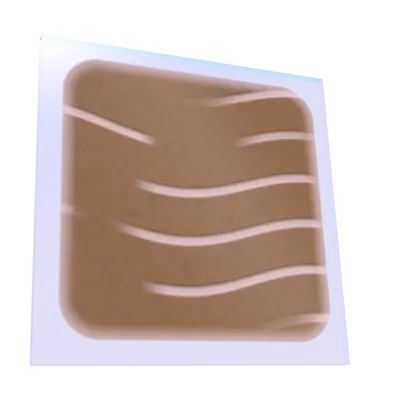
What stretch marks look like on brown and Black skin
Stretch marks pass through two stages.
Early (striae rubrae). Slightly raised lines that are dark brown, purple or violet on dark skin, sometimes itchy. At this stage the marks still have a blood supply and active repair, and they respond best to treatment.
Late (striae albae). After months, the lines flatten, narrow and turn paler than the surrounding skin, with a fine, crinkled surface. On dark skin these pale lines stand out, particularly after sun exposure tans the skin around them.
Common sites are the abdomen and breasts in pregnancy; hips, thighs, buttocks and lower back in teenagers; shoulders and upper arms in people who build muscle; and the inner arms, inner thighs and skin folds after steroid creams.
How to spot it
- Several lines running in the same direction
- A slight dip when you run a finger across older marks
- They appeared during pregnancy, a growth spurt, or a change in weight or muscle
- No pain, and no change over weeks once formed
Causes and triggers
The middle layer of skin, the dermis, contains collagen and elastin fibres that let it stretch and recoil. When skin is stretched faster than these fibres can adapt, they tear, and the skin heals with a scar-like band. Hormones matter as well: cortisol and related steroids weaken the fibres, which is why stretch marks are common in pregnancy and puberty and after steroid use.
Causes to know about:
- Pregnancy, mostly in the last three months
- Puberty
- Weight change, in either direction
- Steroid creams and tablets, including steroids hidden in bleaching and mixed creams
- Medical conditions such as Cushing’s syndrome and some inherited connective tissue disorders
How it is diagnosed at the clinic
Stretch marks are diagnosed by looking. The dermatologist asks about weight, pregnancy, medicines and creams. If the pattern suggests a hormonal cause, blood pressure is checked and blood tests are arranged with the clinic’s internal medicine service.
How to get rid of stretch marks: treatment options at the clinic
Treatment aims to improve colour and texture. Expect improvement, not disappearance, and expect a course of treatment over several months.
| Stage | Options |
|---|---|
| Early, coloured marks | Prescription retinoid cream (not in pregnancy or breastfeeding); microneedling; sun protection |
| Older, pale marks | Microneedling or radiofrequency microneedling; fractional laser resurfacing after a test patch; PRP as an addition |
| Loose skin around the marks | Skin tightening |
On brown and Black skin, needling-based treatments are preferred because they do not heat the surface and so carry a lower risk of dark marks. Laser is used cautiously, with preparation and a test area.
A typical course is three to six treatments, four to six weeks apart, with results judged three months after the last one. After pregnancy, treatment usually starts once breastfeeding has finished, although needling can be discussed earlier.
Choosing not to treat is reasonable. Stretch marks are a normal feature of skin and fade considerably with time.
Prevention and daily care
- Aim for gradual weight change where possible.
- Moisturise during pregnancy for comfort and itch.
- Never use a steroid or lightening cream on the body without medical advice.
- Treat marks early if they bother you.
- Protect treated skin from the sun.
Common questions
Can stretch marks be removed completely?
No treatment removes them entirely. Stretch marks are a type of scar in the deeper skin. Treatments can make them narrower, smoother and closer to your skin colour, often by a noticeable amount. They also fade on their own over one to two years and become much less visible.
What is the best treatment for stretch marks?
For new, coloured stretch marks, a prescription retinoid cream has the best evidence among creams, though it cannot be used in pregnancy or breastfeeding. For older, pale marks, procedures that rebuild collagen work best: microneedling, radiofrequency microneedling and fractional laser, given as a course.
Do creams and oils prevent stretch marks?
Studies of cocoa butter, shea butter, olive oil and most anti-stretch-mark creams have not shown that they prevent or remove stretch marks. Moisturising keeps skin comfortable and reduces itch, which is reason enough to use it, but it does not change the outcome.
Why do I have stretch marks if I am not overweight or pregnant?
Stretch marks commonly appear during growth spurts in the teenage years, on the back, thighs, hips and breasts. They also follow muscle gain, and they run in families. Widespread, wide, purple stretch marks with easy bruising or weight gain around the middle should be checked for a hormonal cause.
Can bleaching creams cause stretch marks?
Yes. Many lightening and mixed creams contain strong steroids, which thin the skin. Used over large areas for months, they cause wide, dark stretch marks on the inner arms, thighs, breasts and abdomen that are permanent. This is one of the commonest causes seen in Lagos clinics.
Are stretch marks different on dark skin?
New stretch marks on brown and Black skin are usually dark brown or purplish, and old ones are paler than the surrounding skin, so the contrast can be more visible. Treatments that heat the skin carry a risk of pigment change, so needling is often preferred to laser.
References
- NHS. Stretch marks.
- American Academy of Dermatology. Stretch marks: why they appear and how to get rid of them.
- DermNet. Striae.
- Cochrane Database of Systematic Reviews. Topical preparations for preventing stretch marks in pregnancy.
- Journal of Cutaneous and Aesthetic Surgery. Management of stretch marks (with a focus on striae rubrae).
This page gives general health information. It does not replace a consultation, and it cannot diagnose your skin. If you are worried about a symptom, see a doctor. Read the full medical disclaimer.
Visit O.C Clinics in Oniru
| Monday–Friday | 9:00 AM–5:00 PM |
|---|---|
| Saturday | 10:00 AM–4:00 PM |
| Sunday | Closed |
