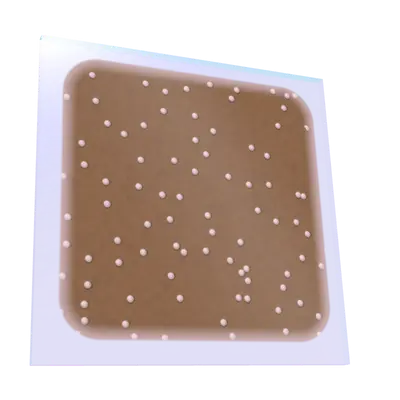
What acne scars look like on brown and Black skin
Scars and pigment usually appear together on dark skin, and the pigment draws the eye first. A cheek can look heavily scarred when most of what is visible is flat brown marks around a few shallow dents. Stretch the skin gently between two fingers: marks stay the same, shallow scars flatten and deep ones remain.
The types:
- Ice-pick scars: narrow, deep holes, like large pores, mostly on the cheeks.
- Boxcar scars: round or oval dents with defined edges.
- Rolling scars: broad, shallow dips that give the skin a wavy look, most obvious in side lighting.
- Hypertrophic scars and keloids: raised, firm scars on the jawline, chest, shoulders and upper back. These are more common in people of African descent.
- Post-inflammatory hyperpigmentation: flat dark marks; see hyperpigmentation.
How to spot it
- Dents or pits that remain months after the spots have gone
- Uneven texture that catches the light
- Firm raised lumps where acne was severe
- Dark marks that are flat to the touch (not scars, but treated alongside)
Causes and triggers
A scar forms when inflammation in a deep spot destroys collagen and the skin repairs itself imperfectly. Too little new collagen leaves a dent; too much leaves a raised scar. The risk rises with:
- nodules and cysts
- acne that goes untreated for years
- squeezing, picking and rough extraction
- a family tendency to scarring
- inflamed acne on the chest, shoulders and jaw in people prone to keloids
The single most effective way to prevent scars is to treat acne early.
How it is diagnosed at the clinic
The dermatologist examines your skin in angled light, maps the scar types and checks that acne is controlled. Your tendency to pigment and to form keloids is noted, because it changes what can safely be offered. Photographs are taken, with your consent, so that progress can be judged fairly.
Acne scar treatment: options at the clinic
No one method treats every scar. A plan usually layers several:
| Scar type | Treatments used |
|---|---|
| Rolling | Subcision; microneedling; radiofrequency microneedling |
| Boxcar | Microneedling; fractional laser; punch techniques for deep ones |
| Ice-pick | TCA CROSS (a strong peel placed in each pit); punch excision |
| Raised scars and keloids | Steroid injections; silicone; pressure |
| Dark marks | Sunscreen; pigment creams; superficial peels |
Subcision releases the fibrous bands that pull rolling scars down, using a needle under local anaesthetic. TCA CROSS places a tiny drop of peel solution in each ice-pick scar to make it fill with new collagen. PRP may be added to needling. Fractional laser resurfacing and fractional picosecond laser are options when pigment risk has been assessed and a test area has healed well. A small amount of filler can lift an individual depressed scar. Surgical scar revision is occasionally used.
On dark skin the order matters: the skin is prepared with sunscreen and pigment-calming cream, the gentlest effective method is used first, and treatments are spaced so that the skin recovers fully.
Prevention and daily care
- Keep acne under control; continue maintenance treatment after it clears.
- Do not pick or squeeze.
- Wear sunscreen every day during and after scar treatment.
- Use the retinoid your dermatologist prescribes; it supports collagen and fades marks.
- Be patient: collagen keeps improving for months after the last treatment.
Common questions
What is the difference between acne scars and dark marks?
A dark mark is flat: you can see it but not feel it. It is extra pigment left by inflammation and fades over months, faster with treatment. A scar changes the surface: a dent or a raised lump you can feel. Scars are permanent without procedures. Many people have both.
Can acne scars be removed completely?
No treatment restores skin to exactly how it was. Most people achieve a clear, worthwhile improvement, often in the range of 50 to 70 per cent, over a course of treatments. Results depend on scar type, with rolling scars responding best and deep ice-pick scars being the most stubborn.
What is the best treatment for acne scars on dark skin?
Microneedling, radiofrequency microneedling, subcision and targeted chemical peel techniques are the mainstays on brown and Black skin, because they carry a low risk of pigment change. Fractional lasers can be used with caution. A dermatologist usually combines two or three methods according to the mix of scars.
How long does acne scar treatment take?
Expect a course of three to six treatments, four to eight weeks apart, followed by several months for collagen to remodel. A realistic timescale from first treatment to final result is six to twelve months. Active acne must be controlled first, or new scars will form.
Do creams or oils remove acne scars?
No cream, oil or serum fills a dent. Retinoids improve texture slightly and help dark marks, and silicone gel helps raised scars. Products sold as scar removers mostly treat pigment, which is why they seem to work on marks but not on true scars.
References
- American Academy of Dermatology. Acne scars: diagnosis and treatment.
- DermNet. Acne scarring.
- NHS. Acne.
- Cochrane Database of Systematic Reviews. Interventions for acne scars.
- Journal of Cosmetic Dermatology. Treatment of acne scars in skin of colour: a review.
This page gives general health information. It does not replace a consultation, and it cannot diagnose your skin. If you are worried about a symptom, see a doctor. Read the full medical disclaimer.
Visit O.C Clinics in Oniru
| Monday–Friday | 9:00 AM–5:00 PM |
|---|---|
| Saturday | 10:00 AM–4:00 PM |
| Sunday | Closed |
