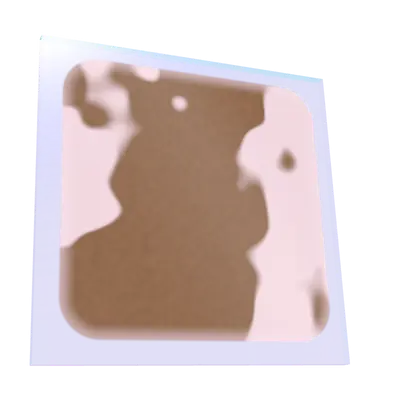
What it looks like on brown and Black skin
The patch is the same shape as whatever came before: a round area where discoid eczema was, pale cheeks after childhood eczema, a light ring where a boil healed, or a strip along a graze. Colour is lighter than normal but not pure white, and the border blends into surrounding skin. The contrast is strong on dark skin, which is why it causes more worry than the original rash.
How to spot it
- You remember a rash, wound or treatment in that exact place.
- The surface feels normal, with no scale.
- It is not spreading.
- Sensation in the patch is normal.
Causes and triggers
Inflammation interferes with the transfer of pigment from pigment cells to skin cells. Common triggers are eczema, seborrhoeic dermatitis, nappy rash, burns, freezing treatment for warts, steroid injections and over-strong peels or lasers.
How it is diagnosed at the clinic
The dermatologist examines the patch under a Wood’s lamp and checks sensation. A scraping excludes pityriasis versicolor, and a skin biopsy is taken only when the cause is unclear.
Treatment at the clinic
Treatment is aimed at the condition that caused it. Once that is quiet, moisturiser, sun protection and time are usually enough. Stubborn patches may be offered a prescribed cream or targeted phototherapy.
Prevention and daily care
- Treat rashes early so that inflammation is brief.
- Ask about pigment risk before cryotherapy, peels or laser.
- Moisturise daily and use sunscreen.
Common questions
How long does hypopigmentation take to go away?
Most patches improve within three to six months and are close to normal by a year, provided the original rash is controlled. Deeper injuries such as burns take longer, and scarred skin may stay pale permanently.
Is it the same as vitiligo?
No. In vitiligo pigment cells are lost, so patches are chalk-white with sharp borders and often appear in new places. After inflammation, pigment cells are still present, the patch is merely lighter, and it stays where the rash was. A Wood's lamp examination tells them apart.
Does sunlight help the colour return?
A little everyday light encourages pigment cells to recover, but sunburn and tanning the surrounding skin make the contrast worse. Use sunscreen and let a dermatologist arrange controlled light treatment if patches persist.
References
- DermNet. Postinflammatory hypopigmentation.
- Clinical and Experimental Dermatology. Postinflammatory hypopigmentation: a review.
This page gives general health information. It does not replace a consultation, and it cannot diagnose your skin. If you are worried about a symptom, see a doctor. Read the full medical disclaimer.
Visit O.C Clinics in Oniru
| Monday–Friday | 9:00 AM–5:00 PM |
|---|---|
| Saturday | 10:00 AM–4:00 PM |
| Sunday | Closed |
