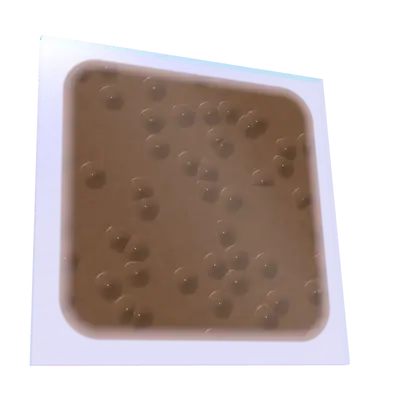
What it looks like on brown and Black skin
Ordinary scalp folliculitis is a scatter of small, itchy, dark bumps or yellow-headed spots, often along the hairline. Acne keloidalis nuchae begins as a few firm, dome-shaped bumps at the nape. Over months they multiply, harden and fuse into a band or plaque of smooth, dark, raised scar. Hairs within it are lost or emerge in tufts, and the area may ooze or smell when infected.
How to spot it
- Bumps follow haircuts by a few days.
- They are at the back of the scalp and neck.
- Some feel hard, like small beads under the skin.
- The area itches or is tender when the collar rubs.
Causes and triggers
Mechanical injury to curved follicles, ingrowing hairs, friction and bacteria combine. It is related to razor bumps of the beard area and is not true acne.
How it is diagnosed at the clinic
Examination with trichoscopy; a swab if there is pus; a biopsy if another scarring condition is possible.
Treatment at the clinic
Early disease: haircut changes, antiseptic shampoo, a combined steroid and retinoid or antibiotic lotion, and a course of tablets if inflamed. Firm bumps: steroid injections. Recurrent disease: laser removal of hair at the nape reduces the hairs that drive it. Large plaques: surgical removal, as described under scar revision. The service sits within hair and scalp.
Prevention and daily care
- Keep hair at the nape slightly longer.
- Insist on disinfected clippers.
- Wash the scalp regularly, especially after sweating.
Common questions
Why do I get bumps at the back of my head after a haircut?
Very close cutting with clippers or a razor leaves sharp, curved hairs that re-enter the skin, and injures the follicles. The skin reacts with inflammation, and in some men this turns into scar tissue. Infection from unclean clippers adds to it.
Can acne keloidalis be cured?
Early bumps can be settled and kept away with treatment and a change in haircut. Established scars do not disappear with creams; they are flattened with injections or removed by laser or surgery. Starting treatment while bumps are small gives the best outcome.
Do I have to stop going to the barber?
No. Ask for a longer cut at the back, no razor or zero-guard edging on the nape, and clippers that have been disinfected, or take your own. Avoid cuts that draw blood.
References
- DermNet. Acne keloidalis nuchae.
- American Academy of Dermatology. Acne keloidalis nuchae: overview.
- DermNet. Scalp folliculitis.
This page gives general health information. It does not replace a consultation, and it cannot diagnose your skin. If you are worried about a symptom, see a doctor. Read the full medical disclaimer.
Visit O.C Clinics in Oniru
| Monday–Friday | 9:00 AM–5:00 PM |
|---|---|
| Saturday | 10:00 AM–4:00 PM |
| Sunday | Closed |
