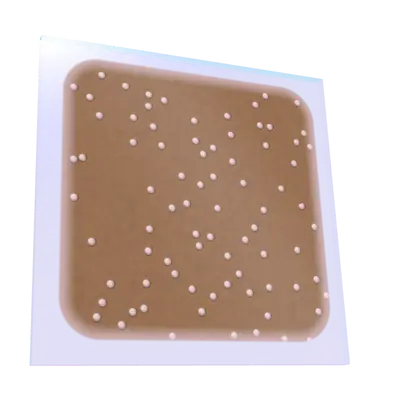
What plantar warts look like on brown and Black skin
A plantar wart is a well-defined disc of rough, grey-yellow skin set into the sole, often at the heel or ball of the foot. Callus builds up over it. After soaking and filing, dark specks show in the centre. Several may join into a “mosaic” plaque. The surrounding skin of a dark foot makes the paler, roughened wart stand out.
How to spot it
- Squeezing the sides hurts more than pressing down.
- Fingerprint-like skin lines stop at its edge.
- Black dots appear on paring.
A hard area over a bony point with lines running through it is a corn or callus.
Causes and triggers
HPV enters softened or broken skin of the sole, typically from wet floors in bathrooms, pools and changing rooms. Sweaty feet and walking barefoot raise the risk. See warts for other sites.
How it is diagnosed at the clinic
Paring and dermoscopy confirm a wart. Atypical lesions have a skin biopsy.
Plantar wart treatment at the clinic
The dermatologist pares the wart and applies or prescribes treatment: high-strength salicylic acid under a plaster, cryotherapy at two to three week intervals, or other applied agents for resistant warts. Treatment is planned to limit pain and marks. See foot skin care.
Prevention and daily care
- Wear slippers in shared wet areas.
- Dry feet well; change socks daily.
- Cover a wart with a waterproof plaster when swimming.
Common questions
Why are plantar warts so hard to get rid of?
The skin of the sole is thick, so treatments struggle to reach the virus, and the wart is hidden from the immune system. Persistence with one method for at least twelve weeks, and paring before each application, gives the best chance.
Do plantar warts need to be treated?
Not always. Painless warts in children often clear within one to two years. Treatment is advised when they hurt, spread, or occur in people with diabetes or weak immunity.
Could a dark spot on my sole be something other than a wart?
Yes. On dark skin, melanoma most often occurs on the sole. A flat or raised dark patch with uneven colour, or a 'wart' that bleeds, grows or fails to respond to treatment, should be examined with a dermatoscope and biopsied if needed.
References
- NHS. Warts and verrucas.
- DermNet. Plantar wart.
- British Journal of Dermatology. British Association of Dermatologists' guidelines for the management of cutaneous warts.
This page gives general health information. It does not replace a consultation, and it cannot diagnose your skin. If you are worried about a symptom, see a doctor. Read the full medical disclaimer.
Visit O.C Clinics in Oniru
| Monday–Friday | 9:00 AM–5:00 PM |
|---|---|
| Saturday | 10:00 AM–4:00 PM |
| Sunday | Closed |
