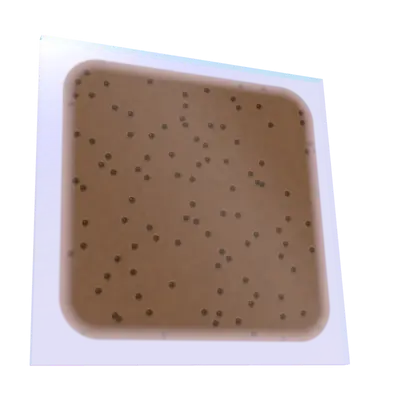
What DPN looks like on brown and Black skin
DPN appears as many small, dark brown to black bumps that look as if they have been stuck onto the skin. Early spots are flat or barely raised and can be mistaken for freckles. With time they become dome-shaped, and some develop a tiny stalk.
They are most numerous over the cheekbones and temples and around the eyes, and may spread to the forehead, neck, upper chest and back. The first spots often appear in the teens or twenties and increase through adult life. Many people have a parent with the same spots.
The medical importance of DPN is nil. Its importance to the person is appearance, and occasionally spots catch on a towel, razor or necklace.
How to spot it
- Many similar small dark bumps, not one or two
- On the upper cheeks, temples and around the eyes
- Slightly raised when you run a finger over them
- No change from week to week; a slow increase over years
- Family members with the same
A flat dark patch is not DPN; see hyperpigmentation and dark spots.
Causes and triggers
DPN is an inherited tendency for small overgrowths of the surface layer of skin. It is a variant of seborrhoeic keratosis. It affects a large proportion of adults with dark skin and is more common in women. Sun exposure may contribute. It is not caused by diet, cosmetics or infection, and it is not contagious.
How it is diagnosed at the clinic
DPN is recognised on sight and confirmed with a dermatoscope, which shows the typical pattern of a harmless surface growth. A spot that does not fit the pattern is removed and sent for laboratory examination. See mole checks and dermoscopy.
DPN removal at the clinic
Treatment is optional. If you choose it, the aim is to remove the spots while disturbing the surrounding skin as little as possible, because injured dark skin pigments.
- Light electrocautery (electrodesiccation). A fine tip delivers a very brief, low-energy current that dries the spot, which is then wiped away or left to crust. This is the method used most.
- Snip or curettage. Raised or stalked spots are snipped with fine scissors or scraped off.
- Laser. An Erbium YAG or other laser can vaporise spots precisely in selected cases.
- Cryotherapy is generally avoided on dark skin for DPN, because freezing destroys pigment cells and leaves pale marks.
How a treatment goes. Numbing cream is applied for 30 to 45 minutes. A small test area is treated first, usually near the hairline, and reviewed after a few weeks to see how your skin heals. If it heals well, the rest are treated over one or more visits. Dozens of spots can be treated in a visit.
Afterwards. Each site forms a small dark crust that drops off in five to ten days. Do not pick. Wash gently, apply petroleum jelly, avoid make-up on the area for a few days and use sunscreen daily. Temporary dark or light dots fade over weeks to months.
Risks. Temporary or, rarely, lasting dark or pale marks; a tiny scar; infection; incomplete removal. Keloid scars on the face from this procedure are very uncommon.
DPN removal is part of skin surgery and minor procedures at the clinic in Oniru, Lagos.
Prevention and daily care
- DPN cannot be prevented, but daily sunscreen may slow new spots and protects treated skin.
- Leave the spots alone between treatments.
- Have any spot that changes checked.
Common questions
What are the small black spots on my face?
If they are slightly raised, 1 to 5 millimetres across, and scattered over the cheeks, temples and around the eyes, they are most likely dermatosis papulosa nigra. DPN is a harmless growth of the skin's surface cells, similar to seborrhoeic keratosis, and is very common in people of African descent.
Can DPN be removed permanently?
Each spot that is removed is gone for good. New ones tend to appear over the years, because the tendency is inherited, so some people return for further treatment every few years. Removal does not make more grow. Daily sunscreen may slow the appearance of new spots.
Does DPN removal leave marks?
A tiny crust forms at each site and falls off in about a week. A flat dark or pale dot can remain for some weeks to months, particularly on darker skin, and usually fades. The risk is kept low by using light settings, treating a test area first and protecting the skin from the sun.
Are these spots cancer?
No. DPN is benign and does not become cancer. A spot that is growing quickly, bleeding, itching, larger than the others or irregular in colour should be examined with a dermatoscope, as should any dark spot on a palm, sole or under a nail.
Can creams remove DPN?
No cream removes them, because they are small growths, not patches of pigment. Bleaching creams, acids and 'spot removers' irritate the surrounding skin and leave dark patches while the spots stay. Removal is a minor procedure done by a doctor.
Is DPN the same as moles or skin tags?
No. Moles are made of pigment cells and are usually present from youth. Skin tags are soft and hang from a stalk, mostly in skin folds. DPN spots are firm, stuck-on, dark bumps on the face and neck. A dermatologist can tell them apart quickly.
References
- DermNet. Dermatosis papulosa nigra.
- American Academy of Dermatology. Seborrheic keratoses: overview.
- Journal of Clinical and Aesthetic Dermatology. Dermatosis papulosa nigra: a clinical review of treatment options in skin of colour.
- British Association of Dermatologists patient information leaflet. Seborrhoeic keratosis.
This page gives general health information. It does not replace a consultation, and it cannot diagnose your skin. If you are worried about a symptom, see a doctor. Read the full medical disclaimer.
Visit O.C Clinics in Oniru
| Monday–Friday | 9:00 AM–5:00 PM |
|---|---|
| Saturday | 10:00 AM–4:00 PM |
| Sunday | Closed |
