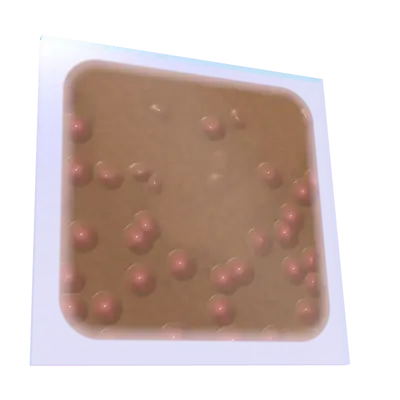
What pemphigus looks like on brown and Black skin
Because blisters rupture almost at once, what is seen are shallow, raw, pink or pale areas where the dark surface layer has been lost, with a collar of loose skin at the edge, and dark crusts. Healed areas are left much darker for months, without scarring. In pemphigus foliaceus, the mouth is spared and the scalp, face and upper trunk are covered in crusted, scaly patches that resemble severe seborrhoeic dermatitis.
How to spot it
- Mouth sores have lasted more than three weeks.
- New raw areas keep appearing on the scalp or trunk.
- Skin near a sore slides off when rubbed.
Causes and triggers
Antibodies target proteins called desmogleins that hold skin cells together. Why this begins is unknown; some medicines can trigger it.
How it is diagnosed at the clinic
Two small skin biopsies are taken: one for routine examination and one for immunofluorescence, which shows the antibodies. Blood tests are done before starting treatment.
Pemphigus treatment at the clinic
Treatment begins with corticosteroid tablets to gain control, with a second medicine or rituximab to maintain it and allow the steroid dose to fall. Erosions are dressed with non-stick dressings, and infection treated. Blood pressure, sugar, bone health and infection risk are monitored with the internal medicine team. Severe cases are referred for hospital care.
Prevention and daily care
- Handle skin gently; wear soft, loose clothing.
- Use a soft toothbrush and mild mouthwash.
- Attend all monitoring visits.
Common questions
Is pemphigus contagious?
No. It is caused by the person's own antibodies and cannot be passed to anyone by touch, kissing, sharing food or sexual contact.
Can pemphigus be cured?
Many people achieve long-lasting remission with modern treatment and some are eventually able to stop medicines. It usually requires treatment for months to years under close supervision.
How is pemphigus different from pemphigoid?
In pemphigus, the split is within the outer skin layer, so blisters are flimsy and mostly seen as erosions, the mouth is commonly involved, and patients are usually middle-aged. In pemphigoid the blisters are deeper, tense and itchy, and it mainly affects older adults.
References
- NHS. Pemphigus vulgaris.
- DermNet. Pemphigus vulgaris.
- British Journal of Dermatology. British Association of Dermatologists' guidelines for the management of pemphigus vulgaris.
This page gives general health information. It does not replace a consultation, and it cannot diagnose your skin. If you are worried about a symptom, see a doctor. Read the full medical disclaimer.
Visit O.C Clinics in Oniru
| Monday–Friday | 9:00 AM–5:00 PM |
|---|---|
| Saturday | 10:00 AM–4:00 PM |
| Sunday | Closed |
