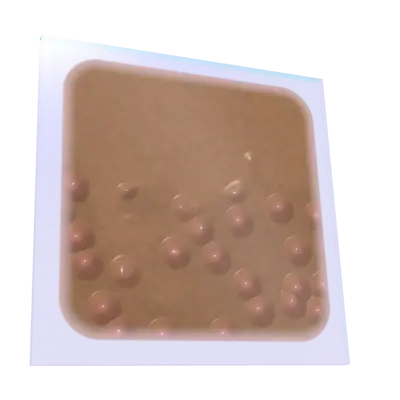
What impetigo looks like on brown and Black skin
It starts as a small blister or sore that breaks quickly, oozes and dries to a stuck-on golden or dark honey crust. The surrounding skin is slightly darker than normal; redness is subtle. New sores appear nearby as the child scratches. The blistering form produces larger, floppy blisters on the trunk, nappy area or limbs that rupture to leave round, shiny patches with a rim of scale. Healed areas are paler or darker for a while.
How to spot it
- Crusts are yellow-brown and moist beneath.
- Sores are multiplying over days.
- Siblings or classmates have the same.
Grouped tiny blisters at the lip edge that recur in the same place are more likely cold sores.
Causes and triggers
Staphylococcus aureus or Streptococcus bacteria enter through broken skin: a scratch, bite, eczema or scabies burrow. Heat and humidity favour it.
How it is diagnosed at the clinic
Diagnosis is by examination. A swab is taken when infection is extensive, recurrent or not responding, to choose the right antibiotic.
Impetigo treatment at the clinic
A few sores are treated with a prescribed antiseptic or antibiotic cream after soaking off the crusts with warm water. Many sores, blisters or fever call for antibiotic tablets or syrup for the full course. The underlying itch is treated at the same visit. Children are seen within children’s skin care.
Prevention and daily care
- Wash hands often and keep nails short.
- Clean cuts and bites and cover them.
- Wash towels and bedding in hot water during treatment.
Common questions
How long is impetigo contagious?
Until the sores have dried and healed, or for 48 hours after starting effective antibiotic treatment. Keep the child away from school or nursery until then, and give them their own towel and flannel.
Does impetigo leave scars?
It affects only the outer skin layer and heals without scarring. On dark skin, flat lighter or darker marks can remain for some weeks before fading. A deeper form called ecthyma, with punched-out ulcers, can scar.
Why does my child keep getting impetigo?
Repeated infection usually means an itchy condition underneath, most often scabies or eczema, or bacteria carried in the nose and shared within the household. Treating the cause and, if advised, the whole family stops the cycle.
References
This page gives general health information. It does not replace a consultation, and it cannot diagnose your skin. If you are worried about a symptom, see a doctor. Read the full medical disclaimer.
Visit O.C Clinics in Oniru
| Monday–Friday | 9:00 AM–5:00 PM |
|---|---|
| Saturday | 10:00 AM–4:00 PM |
| Sunday | Closed |
