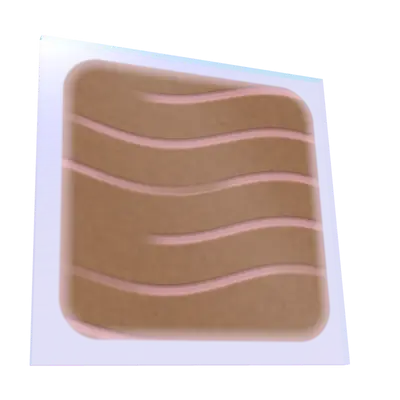
What scabies looks like on brown and Black skin
The rash is a scatter of small, firm bumps the colour of the skin or darker, with scratch marks and crusts. Burrows are short, wavy, greyish lines and are hard to see on dark skin; the best places to look are the sides of the fingers, the finger webs and the inner wrists.
Typical sites are the finger webs, wrists, elbows, armpits, waistline, navel, buttocks, nipples and male genitals, where firm itchy nodules can last for weeks after cure. The face and scalp are spared in adults but involved in babies. After weeks of scratching, the skin becomes thick and dark, and yellow crusts indicate bacterial infection (impetigo).
Crusted scabies is a severe form in frail or immunosuppressed people: thick, scaly crusts on the hands, feet and scalp, with little itch but millions of mites. It is highly contagious and needs specialist care.
How to spot it
- The itch keeps you awake.
- Someone you live with or sleep beside is also scratching.
- Bumps cluster between the fingers, at the wrists and around the waist.
- A baby is irritable, feeding poorly and has bumps on the palms and soles.
Causes and triggers
The female mite burrows into the outer skin and lays eggs; new mites mature in about two weeks. A typical case involves only ten to fifteen mites, which is why the rash is mostly an allergic reaction. Outbreaks occur in families, schools, hostels, barracks and care homes.
How it is diagnosed at the clinic
Scabies is diagnosed from the history and the pattern of the rash. A dermatoscope can show the mite at the end of a burrow, and a scraping examined under the microscope confirms it when needed. Other causes of night-time itch are considered if the picture does not fit; see Why does my skin itch at night?
Scabies treatment at the clinic
- A scabicide for everyone on the same day. The lotion or cream is applied to cool, dry skin from the jawline to the toes, including between fingers and toes, under the nails, the navel and genitals, and left on for the time stated. Babies and older adults also have the scalp and face treated. The treatment is repeated after a week.
- Tablets are used for outbreaks, crusted scabies or where lotion has failed, if suitable for the person.
- Bedding and clothes used in the previous three days are washed hot and dried in the sun or ironed, or sealed in a bag for several days.
- Infection is treated with antibiotics.
- The lingering itch is eased with moisturiser, an anti-itch cream and, at night, an antihistamine.
Children’s cases are seen within children’s skin care. The clinic can give written instructions for schools and households.
Prevention and daily care
- Treat all contacts together; this is the single step that prevents return.
- Trim fingernails and scrub under them on treatment day.
- Avoid sharing beds, towels and clothes until everyone has been treated.
- Children can return to school the day after the first treatment.
Common questions
How do you get scabies?
Through prolonged, direct skin contact with a person who has it, such as sharing a bed, holding hands for long periods, caring for a child or sexual contact. Brief contact like a handshake rarely spreads it. Shared bedding and clothing can spread it but less often. It has nothing to do with being dirty.
Why am I still itching after scabies treatment?
The itch is an allergic reaction to the mites and their droppings, which stay in the skin after the mites are dead. Itching commonly continues for two to four weeks and fades gradually. New burrows or bumps after four weeks, or itching in contacts, suggests treatment failure or re-infestation and needs review.
Does everyone in the house need treatment?
Yes. Symptoms take four to six weeks to appear after a first infestation, so people who feel well can still carry mites and pass them back. Everyone in the household and any sexual partners are treated on the same day, whether or not they itch.
Can scabies go away on its own?
No. Without treatment the mites keep breeding, the itch continues for months, and scratching leads to bacterial skin infection, which in children can affect the kidneys. Antihistamines and steroid creams ease the itch but do not kill the mites.
Is 'craw craw' the same as scabies?
'Craw craw' is a general word used in West Africa for very itchy rashes. Scabies is one of the commonest causes, but the term is also used for other conditions. A dermatologist can confirm which one you have.
References
- World Health Organization. Scabies: fact sheet.
- NHS. Scabies.
- DermNet. Scabies.
- American Academy of Dermatology. Scabies: diagnosis and treatment.
This page gives general health information. It does not replace a consultation, and it cannot diagnose your skin. If you are worried about a symptom, see a doctor. Read the full medical disclaimer.
Visit O.C Clinics in Oniru
| Monday–Friday | 9:00 AM–5:00 PM |
|---|---|
| Saturday | 10:00 AM–4:00 PM |
| Sunday | Closed |
