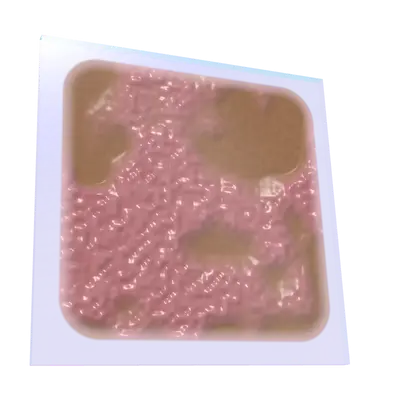
What hives look like on brown and Black skin
On dark skin, weals are raised, smooth swellings the same colour as the skin or slightly darker or paler; the redness seen on light skin is often absent. They are easier to feel than to see and may be outlined by a faint halo. They vary from pinhead size to large, map-like patches, itch fiercely, and move: a weal on the arm in the morning is gone by evening and another has appeared on the thigh.
Deeper swelling, called angioedema, puffs up the lips, eyelids, hands, feet or genitals and feels tight or sore more than itchy. It takes up to three days to settle.
Hives do not leave marks. Weals that stay in one place for more than a day, hurt, or leave bruises or dark stains suggest a different condition and need a skin biopsy.
How to spot it
- Draw around a weal with a pen. If it has gone or moved by the next day, it is hives.
- Stroke the forearm firmly with a blunt point; a raised line within minutes indicates dermographism, a common physical type.
- Note whether weals follow heat, exercise, cold water, pressure from straps, or sunlight.
Small prickly bumps in sweaty areas that last for days are more likely heat rash.
Causes and triggers
Hives occur when mast cells in the skin release histamine. Acute attacks follow infections (the commonest cause in children), medicines, foods and stings. Physical types are set off by scratching, pressure, heat and sweating (frequent in Lagos), cold, or sun. Chronic spontaneous urticaria is often autoimmune and can be linked with thyroid disease.
How it is diagnosed at the clinic
The diagnosis rests on your description, photographs of the weals and examination. Acute hives need no tests. In chronic hives, a small set of blood tests looks for inflammation and thyroid disease, arranged with the internal medicine service where appropriate. Physical triggers are tested in the clinic.
Hives treatment at the clinic
- A modern, non-drowsy antihistamine taken every day, not only when weals appear. If the standard dose is not enough, the dermatologist may increase it.
- Add-on medicines for flares or for hives that do not respond.
- A biologic injection for chronic hives that resist antihistamines, where suitable.
- Trigger advice and a written plan for what to do if swelling affects the mouth or throat.
Follow-up can be by online consultation. Children are seen within children’s skin care.
Prevention and daily care
- Take treatment regularly until the dermatologist advises reducing it.
- Keep cool; wear loose cotton.
- Record attacks with dates and photographs.
- Tell every doctor and pharmacist about medicines that have caused hives.
Common questions
What triggers hives?
In a short attack, the usual triggers are a viral infection, a medicine such as an anti-inflammatory painkiller or antibiotic, a food, or an insect sting. In hives lasting longer than six weeks, no outside trigger is found in most people; the immune system is activating the skin's mast cells on its own.
How long do hives last?
Each weal lasts under 24 hours. An acute attack usually ends within days and almost always within six weeks. Chronic hives continue beyond six weeks and can come and go for months or a few years before settling, and are controlled with regular treatment during that time.
Are hives caused by something I ate?
Sometimes, in acute hives that start within an hour or two of eating a particular food. Food allergy is rarely the cause of chronic daily hives, so long lists of forbidden foods and broad 'allergy panels' are seldom helpful. Keep a simple diary instead and discuss it with the doctor.
When are hives dangerous?
When they come with swelling of the tongue or throat, difficulty breathing or swallowing, wheeze, vomiting, faintness or collapse. These are signs of anaphylaxis, a medical emergency. Go to the nearest emergency department immediately.
References
- NHS. Hives.
- DermNet. Urticaria: an overview.
- Allergy. The international EAACI/GA²LEN/EuroGuiDerm/APAAACI guideline for the definition, classification, diagnosis and management of urticaria.
- American Academy of Dermatology. Hives: diagnosis and treatment.
This page gives general health information. It does not replace a consultation, and it cannot diagnose your skin. If you are worried about a symptom, see a doctor. Read the full medical disclaimer.
Visit O.C Clinics in Oniru
| Monday–Friday | 9:00 AM–5:00 PM |
|---|---|
| Saturday | 10:00 AM–4:00 PM |
| Sunday | Closed |
