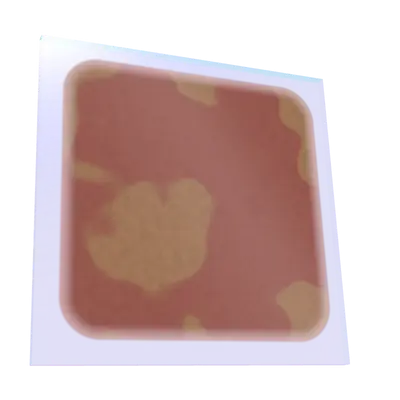
What diaper rash looks like on brown and Black skin
On a baby with dark skin, the affected area is a deeper brown, purplish or shiny rather than bright red, and feels warm and slightly swollen. It covers the rounded surfaces that press against the nappy: buttocks, lower abdomen, genitals and upper thighs. The creases, which the nappy does not touch, are usually clear in a simple irritant rash.
As it heals, the skin may peel and look lighter or darker for a few weeks.
Patterns that suggest something else:
- In the folds, with satellite spots: yeast (Candida).
- Greasy, salmon or dark patches in the folds with scalp scale: infantile seborrhoeic dermatitis (cradle cap).
- Honey-coloured crusts or blisters: bacterial infection (impetigo).
- A rash that never clears, with a rash elsewhere or poor weight gain: needs specialist assessment.
How to spot it
- The rash matches the area covered by the nappy.
- It is worse after diarrhoea or a long night.
- It improves when the nappy is left off.
Causes and triggers
Urine raises the skin’s pH and softens it; enzymes in stool then break down the surface. Friction and trapped heat finish the job, and Lagos humidity keeps the area damp. Fragranced wipes and antiseptic bath additives add irritation.
How it is diagnosed at the clinic
The doctor examines the whole baby, not only the nappy area, and may take a swab if infection is suspected. An online consultation with clear photographs suits mild, recurring cases.
Diaper rash treatment
- Air. Nappy-free time on a towel or washable mat.
- Barrier. A thick ointment at every change.
- Change at least every three to four hours by day, and promptly after stool.
- Antifungal cream if yeast is present, for the full course.
- A mild steroid for a few days only when prescribed.
Babies are seen with a parent within skin care for babies and children.
Prevention and daily care
- Fit nappies loosely enough for air to circulate.
- Dry the folds gently after each wash.
- Apply barrier cream routinely at night and during diarrhoea.
- Bathe once a day with plain water or a soap substitute.
Common questions
How do I treat diaper rash quickly?
Change the nappy as soon as it is wet or soiled, clean with plain water, pat dry, leave the nappy off for a while several times a day, and apply a thick layer of barrier cream at every change without rubbing off the previous layer. Most rashes improve within two to three days.
How do I know if it is a yeast (Candida) nappy rash?
Yeast rash is deep in the skin folds, bright or dark and moist, with a sharp edge and small separate spots or pustules scattered beyond it. It often follows antibiotics or a rash lasting more than three days, and needs an antifungal cream as well as barrier care.
Is powder good for nappy rash?
It is not recommended. Talc and other powders can be breathed in by the baby and may irritate the lungs, and they cake in moist folds. A barrier cream protects the skin better.
Do cloth nappies cause more rash than disposables?
Modern disposable nappies draw moisture away from the skin and are linked with less rash. Cloth nappies are fine if changed often, washed with mild detergent, rinsed thoroughly and dried in the sun. With either type, how often you change matters most.
References
- NHS. Nappy rash.
- DermNet. Napkin dermatitis.
- American Academy of Dermatology. How to treat diaper rash.
This page gives general health information. It does not replace a consultation, and it cannot diagnose your skin. If you are worried about a symptom, see a doctor. Read the full medical disclaimer.
Visit O.C Clinics in Oniru
| Monday–Friday | 9:00 AM–5:00 PM |
|---|---|
| Saturday | 10:00 AM–4:00 PM |
| Sunday | Closed |
