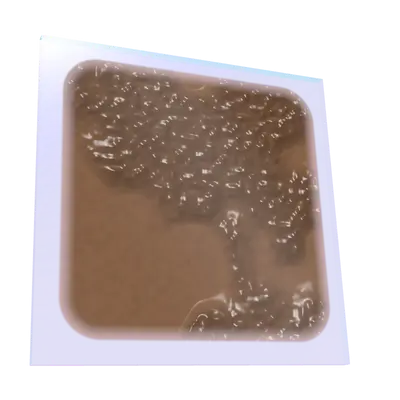
What skin tuberculosis looks like on brown and Black skin
- Lupus vulgaris: a dark brown to violet plaque, commonly on the face, buttock or a limb, that creeps outward over months to years. One edge heals with a thin, pale scar while another stays raised and active.
- Tuberculosis verrucosa cutis: a firm, rough, wart-like plaque on a hand, foot, knee or buttock.
- Scrofuloderma: a painless lump over a lymph node in the neck, armpit or groin, or over a bone, that softens, breaks through the skin and leaves puckered, bridged scars and draining openings.
- Tuberculids: crops of dark bumps or tender nodules on the limbs as an immune reaction to TB elsewhere.
How to spot it
- A lesion has grown slowly for months.
- It is painless.
- Antifungal, steroid and antibiotic creams have not cleared it.
- You or a household member has had TB or a long-standing cough.
Causes and triggers
Mycobacterium tuberculosis reaches the skin through the bloodstream, by spread from an infected lymph node or bone beneath, or by direct entry through broken skin.
How it is diagnosed at the clinic
A skin biopsy is examined under the microscope and tested for the TB bacterium by culture or molecular methods. A chest X-ray, sputum tests where there is cough, and HIV and blood sugar tests are arranged through the infectious diseases and internal medicine services.
Treatment at the clinic
The clinic confirms the diagnosis and coordinates treatment with the national TB programme, which supplies the medicines and follows patients to completion. Skin lesions are reviewed during treatment and wounds dressed. Scars can be assessed after cure.
Prevention and daily care
- Complete BCG vaccination for babies as scheduled.
- Seek testing for any cough lasting more than two weeks.
- Take every dose of TB treatment for the full course.
Common questions
Is skin tuberculosis contagious?
Skin lesions themselves rarely spread TB. The risk to others comes from TB in the lungs, which may be present at the same time, so everyone diagnosed with skin TB has a chest assessment, and close contacts are screened.
How is skin TB treated?
With the same combination of antibiotics used for lung TB, taken every day for at least six months. In Nigeria these medicines are provided free through the national TB programme. Lesions begin to flatten within weeks; stopping early risks relapse and drug resistance.
Why did it take so long to diagnose?
Skin TB is uncommon, painless and slow, and it imitates fungal infection, warts, psoriasis, lupus and skin cancer. The diagnosis depends on someone taking a biopsy, which is why a patch that fails to respond to treatment should always be sampled.
References
- World Health Organization. Tuberculosis: fact sheet.
- DermNet. Cutaneous tuberculosis.
- Federal Ministry of Health, Nigeria. National tuberculosis, leprosy and Buruli ulcer management and control guidelines.
This page gives general health information. It does not replace a consultation, and it cannot diagnose your skin. If you are worried about a symptom, see a doctor. Read the full medical disclaimer.
Visit O.C Clinics in Oniru
| Monday–Friday | 9:00 AM–5:00 PM |
|---|---|
| Saturday | 10:00 AM–4:00 PM |
| Sunday | Closed |
