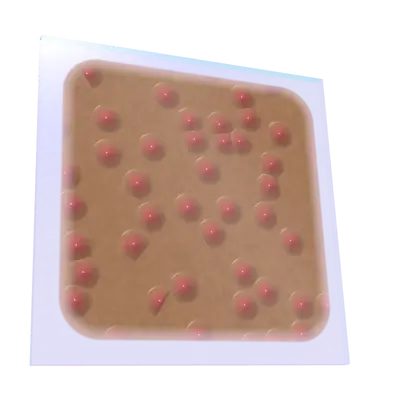
What rosacea looks like on brown and Black skin
Redness, the hallmark in light skin, appears on dark skin as a dusky, violet-brown or simply darker area across the cheeks and nose, sometimes noticed only by comparing with the neck. What the person feels is often clearer than what others see: heat, tightness and stinging, especially after sun, a hot meal or a new product.
Small, firm bumps and pus spots appear on the cheeks, nose, chin and central forehead and heal with dark marks. The skin is dry and reactive. Eyes may feel gritty. Thickening of the nose is uncommon.
Conditions that look similar include acne, seborrhoeic dermatitis, the butterfly rash of lupus, and steroid cream damage.
How to spot it
- Your face flushes or feels hot several times a week.
- Many skincare products sting.
- Bumps are on the central face only, with no blackheads.
- Sun, heat or pepper make it worse within hours.
Causes and triggers
The cause is not fully known. Overactive facial blood vessels, an exaggerated immune response in the skin, and a skin mite (Demodex) all play a part. Lagos sun and heat, pepper-rich meals and hot kitchens are everyday triggers.
How it is diagnosed at the clinic
Diagnosis is clinical: the pattern, your symptoms and your triggers. Dermoscopy shows fine vessels not visible to the eye. A blood test or skin biopsy is arranged if lupus is a possibility.
Rosacea treatment at the clinic
- Skincare reset: a soap-free cleanser, a plain moisturiser and a mineral or tinted broad-spectrum sunscreen.
- Prescription creams or gels for bumps and inflammation, used for at least eight to twelve weeks.
- Tablets for moderate to severe bumps or eye symptoms.
- Vascular laser for fixed redness and visible vessels, with settings chosen for dark skin after a test area.
- Maintenance treatment to prevent relapse.
Reviews can be held by online consultation.
Prevention and daily care
- Use sunscreen every morning and seek shade at midday.
- Keep a trigger diary and adjust what you can.
- Introduce one new product at a time, testing near the jaw first.
- Let hot drinks and food cool slightly.
Common questions
Do Black people get rosacea?
Yes. It is less common than in very fair skin but is often overlooked because redness does not show clearly. Clues are a face that feels hot and stings, bumps limited to the cheeks, nose, chin and forehead, and acne treatments that burn. Delay in diagnosis is common.
How is rosacea different from acne?
Acne has blackheads and whiteheads, affects the jawline, chest and back as well, and usually starts in the teens. Rosacea has no blackheads, stays on the central face, starts after 30, and comes with flushing and sensitivity. Some acne treatments irritate rosacea, so the distinction matters.
What triggers a rosacea flare?
Sunlight and heat are the commonest, followed by hot drinks, pepper and spicy food, alcohol, exercise, strong emotions and harsh skincare. Triggers differ between people; a diary kept for a few weeks shows yours.
Can steroid cream cause rosacea?
Yes. Steroid and mixed lightening creams used on the face produce a rosacea-like eruption with bumps, burning and visible veins that worsens each time the cream is stopped. It needs supervised withdrawal and rosacea treatment.
References
This page gives general health information. It does not replace a consultation, and it cannot diagnose your skin. If you are worried about a symptom, see a doctor. Read the full medical disclaimer.
Visit O.C Clinics in Oniru
| Monday–Friday | 9:00 AM–5:00 PM |
|---|---|
| Saturday | 10:00 AM–4:00 PM |
| Sunday | Closed |
