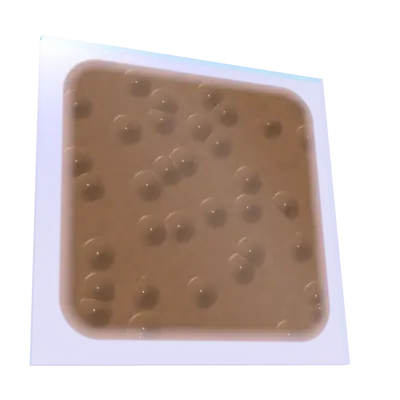
What ingrown hairs look like on brown and Black skin
Each one is a small bump, skin-coloured to dark brown, sometimes with a yellow head, and often with a visible hair coiled beneath the surface. On dark skin the lasting problem is the stain: weeks of hair removal leave a peppering of dark dots along the bikini line, underarms, legs or chin that many people find more troubling than the bumps.
Common sites:
- Bikini line and pubic area, where hair is coarse and curly and underwear rubs
- Underarms
- Lower legs and thighs
- Chin and neck in women who pluck or thread; persistent coarse hair here may point to hirsutism
- Beard area in men; see razor bumps
How to spot it
- Bumps appear only where you remove hair.
- They follow hair removal by a day or more.
- A hair can be seen in or beside the bump.
- They clear if you let the hair grow.
Causes and triggers
Curly hair cut to a sharp point re-enters the skin as it grows; hair pulled out by wax or tweezers regrows through a narrow channel that dead skin cells can block. Tight clothing presses hairs back against the skin, and heat and sweat add bacteria.
How it is diagnosed at the clinic
A look with a dermatoscope shows the trapped hairs. A swab is taken from infected bumps, and women with excess hair growth may be offered hormone tests through the internal medicine service.
Ingrown hair treatment at the clinic
- Hair removal advice. Trimming with clippers causes the fewest ingrown hairs. For a shave: soften the hair, use gel, shave with the grain using a sharp single blade, and do not stretch the skin.
- Creams. A retinoid or a mild acid lotion keeps follicle openings clear; an antibiotic lotion treats infected bumps.
- Release. A trapped hair is freed with a sterile needle.
- Laser hair removal. A long-wavelength laser suited to dark skin reduces the hair itself and is the most lasting answer for the bikini line, underarms and chin.
- Marks. Dark spots are treated as described under hyperpigmentation, sometimes with chemical peels.
These services sit within men’s and women’s skin health.
Prevention and daily care
- Exfoliate gently two or three times a week; see How to exfoliate your skin safely.
- Moisturise after hair removal.
- Wear cotton underwear that does not rub the bikini line.
- Replace blades often and never share them.
Common questions
Should I pull out an ingrown hair?
Not by digging. If a loop of hair is clearly visible above the skin, you can lift the free end with a clean needle or tweezers after a warm compress, without plucking it out. Hairs under the skin should be left; squeezing and cutting cause infection, scars and dark marks.
How long does an ingrown hair take to go away?
Most settle within one to two weeks once the hair grows out and hair removal in the area is paused. The dark mark it leaves on brown and Black skin can last for months. A bump that grows, becomes very painful or persists beyond a few weeks should be examined.
Why do I get bumps after waxing?
Waxing pulls the hair from the root. The new hair is fine and sharp-tipped and must find its way up through the follicle; if dead skin blocks the opening or the hair is curly, it turns sideways into the skin. Bumps within hours of waxing are irritation or infection of the follicles, not ingrown hairs.
Is an ingrown hair lump the same as a boil?
No, though they look alike. An ingrown hair causes a small bump centred on a trapped hair. A boil is a deeper bacterial infection that is larger, hot and very painful. Repeated painful lumps in the groin or armpits that leave scars may be hidradenitis suppurativa, which needs a dermatologist.
References
- NHS. Ingrown hairs.
- DermNet. Pseudofolliculitis barbae.
- American Academy of Dermatology. Hair removal: how to shave.
This page gives general health information. It does not replace a consultation, and it cannot diagnose your skin. If you are worried about a symptom, see a doctor. Read the full medical disclaimer.
Visit O.C Clinics in Oniru
| Monday–Friday | 9:00 AM–5:00 PM |
|---|---|
| Saturday | 10:00 AM–4:00 PM |
| Sunday | Closed |
